
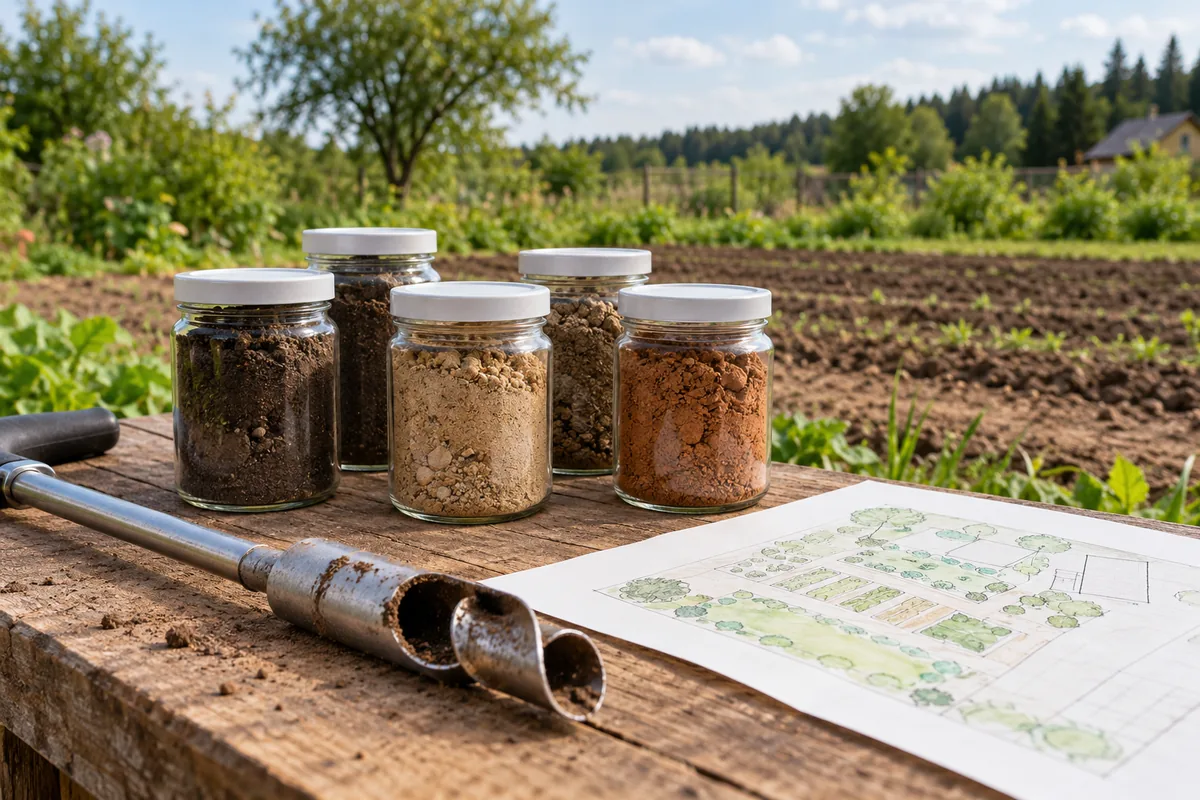
Soil is heterogeneous even within a small parcel. Fill, previous work, vegetation, terrain and depth may alter the properties examined. The result from one sample should therefore be linked to a particular location and task, rather than automatically extended to the entire area.
Define the question before sampling
Investigating contamination, comparing a soil deposit with a site and assessing changes in the fertile soil layer require different approaches. A collection of randomly filled soil jars without a plan does not replace a justified sampling layout. Locations and conditions are agreed with a specialist in the relevant field.
What makes sampling locations comparable
- Clear coordinates or reproducible reference points.
- Depth and a description of the soil horizon relevant to the task.
- Information on filling, soil removal, fertilisers and other impacts.
- The date, weather conditions and surface condition.
- Separate identification of each sample and its connection to the record.
Background locations cannot be selected solely by appearance
The land beyond a fence may differ in soil origin and history of use. Its apparent cleanliness does not guarantee suitability as a comparison location. Justifying background conditions requires information on the comparability of natural conditions and land-use activities.
Why depth matters
Mixing the upper layer with underlying material can change the result and conceal the distribution of the parameter examined. Whether a composite sample is permissible depends on the plan and method. Do not mix all samples yourself to reduce testing costs.
A result for a single location is likewise distinguished from a conclusion about spatial extent. Describing the boundaries of a disturbance requires data that justifiably connects individual observations to the spatial pattern, rather than merely stating the highest value detected.
What to provide with the test report
Keep the sampling record, location plan, photographs, a description of the soil profile if it was examined, and transport information. If the object was obtained from another person, state the known transfer history and any gaps. An accurate laboratory result does not restore lost sample provenance.
The opinion must distinguish data about the sample, a conclusion about a particular site and a hypothesis about a possible source of impact. A shortage of sampling locations or historical materials cannot be remedied by broadening the wording of the conclusion. Where necessary, an additional examination is planned with an explanation of the gap it is intended to fill.